Aave Bad Debt Crisis: The KelpDAO rsETH Exploit Explained
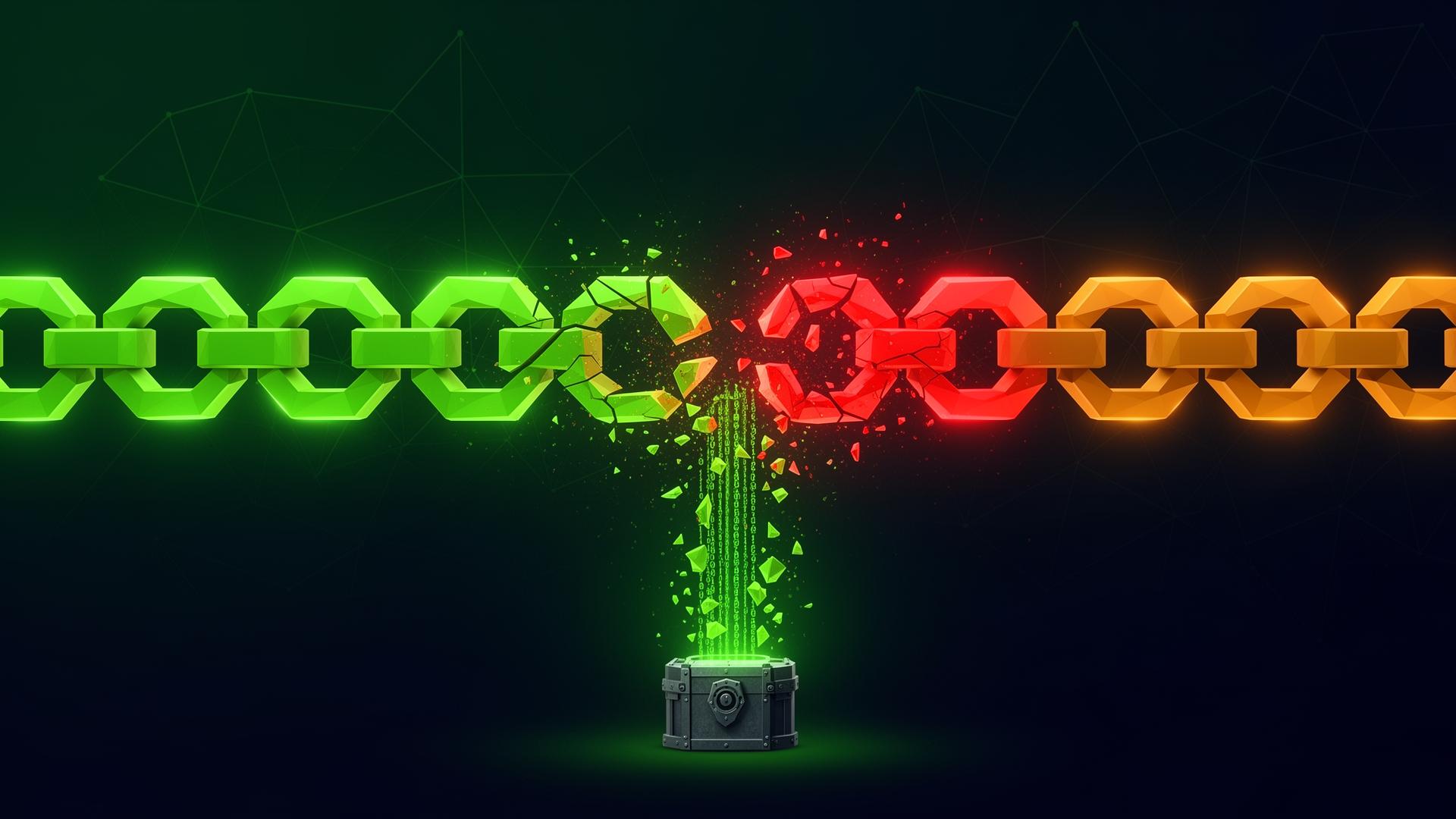
The KelpDAO rsETH Exploit and Aave's $200M Bad Debt: A DeFi Wake-Up Call
On April 18, 2026, the largest DeFi security incident of the year unfolded when an attacker drained roughly $292 million from KelpDAO's LayerZero-based rsETH bridge — and the blast radius didn't stop there. Within hours, Aave, the largest lending protocol in DeFi, was staring down an estimated $200 million in bad debt, froze affected markets, and watched users pull more than $6.2 billion in a panic-driven liquidity crunch.
The most damning detail: cross-chain mint authorization on the bridge appears to have required only a single signer — no multisig, no threshold scheme, no separation of duties. A proper threat model would have flagged that design as unacceptable on day one.
Key Takeaways
What: Cross-chain bridge exploit on KelpDAO drained ~116,500 rsETH (~$292M) in 46 minutes.
Root cause: Cross-chain mint messages were authorized by a single signer with no multisig. Compromise (or misuse) of that one key was enough to mint unbacked rsETH at will.
Where it hurt Aave: The unbacked rsETH was deposited as collateral on Aave V3, leaving the protocol with ~$200M in unrecoverable bad debt.
Cascade: ~$6.2B in withdrawals from Aave; ~$13B in total DeFi outflows across Lido Earn, Morpho, Curve, and Upbit.
Prevention: A formal threat model covering the bridge's trust boundaries would have flagged the single-signer mint path as a critical, unacceptable risk before launch.
What Happened
KelpDAO is a liquid restaking protocol with roughly $1.57B in TVL prior to the incident. On April 18, an attacker exploited the protocol's LayerZero cross-chain bridge to mint rsETH on a destination chain without the corresponding backing on the source chain. In under an hour, ~116,500 rsETH — about 18% of the circulating supply — was extracted. Two follow-on attempts targeting another ~$10M were detected and partially blocked.
The newly minted, unbacked rsETH was immediately deposited into Aave V3 as collateral and used to borrow blue-chip assets (ETH, USDC, USDT). When rsETH's price collapsed as the exploit became public, those borrow positions became massively undercollateralized — but liquidators couldn't unwind them profitably because the underlying collateral had no real backing.
Technical Analysis
How the Exploit Worked
The attack chain combined three failure modes that are individually subtle but catastrophic in combination:
Single-signer bridge authorization: Cross-chain mint messages on KelpDAO's LayerZero adapter required only one signature to be accepted as valid. There was no multisig, no threshold signing scheme, and no independent verifier in the loop. Whoever controlled that key — through compromise, insider misuse, or a flawed signing service — could mint rsETH on the destination chain without any corresponding lock on the source chain.
Oracle lag: Aave's price feed for rsETH did not detect the supply inflation in real time, so the unbacked tokens were valued at the pre-exploit market price.
Composability blast radius: Because rsETH was a permitted collateral asset on Aave V3 (and integrated into Morpho, Curve, and Lido Earn vaults), the bad collateral was instantly borrowable against — turning a bridge bug into a lending-protocol insolvency.
This is the textbook signature of an exploit that passes individual contract audits but fails systemic review. Each component — the bridge, the oracle, the lending market — was reviewed in isolation. No one stress-tested the assumption that "minting rsETH always implies backing exists," and no one challenged the trust assumption that "one signer is enough to authorize unlimited cross-chain mints."
Why Automated Scanners Missed It
AI-only and static-analysis tools excel at catching well-known patterns: reentrancy, integer overflow, missing access controls. They struggle with:
Trust assumptions and signer policy — a single-signer design isn't a "bug" the scanner can flag; it's an architectural decision that only a threat model surfaces.
Cross-protocol invariants that span multiple codebases and chains.
Economic assumptions baked into oracle and collateral configurations.
The Real Prevention: Threat Modeling
The single most effective control that would have prevented this exploit is one that costs almost nothing to perform: a structured threat model of the bridge's trust boundaries, performed before launch and revisited on every material change.
A competent threat-modeling session for KelpDAO's cross-chain mint path would have asked, in plain language:
Who can authorize a mint on the destination chain? One key. Unacceptable.
What happens if that key is compromised, lost, or misused? Unlimited unbacked supply. Catastrophic.
What downstream protocols accept the resulting token as collateral? Aave, Morpho, Curve, Lido Earn. Cascading insolvency risk.
What detection and circuit-breaker exists if supply is inflated? None at the oracle layer. Critical gap.
Each of those answers is a required mitigation on the threat-model output: an m-of-n multisig (or threshold signature scheme) for cross-chain mint authorization, hardware-key custody with separation of duties, supply-aware oracles with circuit breakers, and pre-defined emergency response actions for downstream consumers like Aave.
Threat modeling is not a deliverable that lives in a PDF. It's a continuous practice — re-run when contracts change, when integrations are added, and when a new asset is onboarded as collateral. The KelpDAO incident is the clearest evidence in years that protocols that skip threat modeling are not "secure with audits"; they are one compromised key away from a nine-figure loss.
Impact and Implications
The numbers tell the story of how DeFi composability amplifies single failures:
$292M directly stolen from KelpDAO.
~$200M in bad debt left on Aave V3 — the largest single bad-debt event in the protocol's history.
$6.2B withdrawn from Aave in under 24 hours as users fled.
$13B in total DeFi outflows across affected protocols.
Aave governance forced into an emergency overhaul of collateral onboarding and oracle policies.
Ledger's CTO described 2026 as shaping up to be DeFi's "worst year in terms of hacks," and the Kelp incident is the clearest example yet of how a single point of failure — one signer, one key, one missing threat model — can cascade across the entire ecosystem.
How to Protect Your Protocol
Run a formal threat model before launch. Map every trust boundary — especially cross-chain — and enumerate compromise scenarios. FYEO's security team performs threat modeling as a standard part of every engagement.
Never accept a single-signer authorization path for value-bearing actions. Cross-chain mints, upgrades, and pause functions must be gated by an m-of-n multisig or threshold signature scheme with hardware-key custody and separation of duties.
Audit the supply path, not just the contract. Verify that every mint of a wrapped or restaked asset has a verifiable backing event. Smart contract audits must cover cross-chain message flows end to end.
Use supply-aware oracles. Price feeds should incorporate circulating-supply checks and circuit breakers when supply changes anomalously.
Run continuous fuzz testing against integrated assets — not just your own code. Differential fuzzing across bridge + lending boundaries catches the invariants that unit tests miss.
Combine AI scanners with human review. Automated tools find known bug classes fast; experienced auditors find the trust-assumption and economic flaws that scanners can't reason about.
Conclusion
The KelpDAO exploit and the Aave bad-debt crisis it triggered are a stark reminder that blockchain security is a systems problem, not a contract problem. A single-signer mint path is not a vulnerability a scanner finds — it's a design decision that a threat model rejects on sight. Skip the threat model, and one weak link turns a $292M bridge bug into a $13B DeFi-wide event.
At FYEO, threat modeling is the first phase of every engagement, paired with our hybrid AI + human audit methodology. AI-augmented analysis covers ground at scale; senior auditors stress-test trust boundaries, signer policies, and cross-protocol invariants that scanners can't reason about. If your protocol integrates restaked assets, cross-chain bridges, or third-party collateral, talk to our security team before the next exploit makes the decision for you.
References
CoinDesk — The $292 million Kelp exploit: how it happened, and what it means for DeFi
Aave Governance — rsETH incident, 2026-04-18 (LlamaRisk post-mortem)
The Central Bulletin — KelpDAO Hit for $292 Million as Aave Faces Nine-Figure Bad Debt
AInvest — Aave Faces $200M Bad Debt Following KelpDAO Bridge Exploit
CoinCentral — KelpDAO Hack Triggers $13 Billion DeFi Wipeout and Aave Crisis